
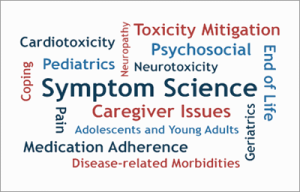
The Supportive Care and Symptom Management program supports studies on the prevention or treatment of acute and chronic symptoms and morbidities related to cancer and its treatment. This includes the impact on the quality of life of patients and their informal caregivers. The program also supports studies of patients and their caregivers at the end of life.
On This Page
- All Heading 2s will automatically be pulled in to this list.
- Do not edit the content on this template.
About Supportive Care and Symptom Management
The program supports research in three areas: prevention or treatment of acute or chronic symptoms and morbidities related to cancer, its treatment and caregiving (symptom management research); effects on quality of life from cancer, its treatment and caregiving (quality of life research); and end-of-life psychosocial issues, caregiving and treatment strategies (end-of-life research).
Through the NCI Community Oncology Research Program (NCORP), clinical trials are underway to evaluate therapies to prevent or ameliorate a broad range of symptoms and/or toxicities associated with cancer its treatment and caregiving. Other studies funded separately are investigating a range of treatment effects on health-related quality of life and a variety of influences on the end-of-life cancer experience.
Topic Areas include: Anorexia, Cachexia, Cardiotoxicity, Caregiver Issues, Cognitive Dysfunction, Distress/Anxiety/Depression, End of Life, Fatigue, Geriatrics, Hot Flashes, Lymphedema, Medication Adherence, Mucositis, Multiple Symptoms, Musculoskeletal Symptoms, Nausea, Neuropathy, Nutrition, Oral Complications, Other Supportive Care Issues, Pain, Palliative Care, Pediatrics/Adolescents/Young Adult, Physical Functioning, Quality of Life, Skin Toxicities, Sleep Disorders, and Urinary Complications.
Selected Topics
- HEAL Initiative
- Patient Resources on Side Effects of Cancer Treatment
- Patient Resources on Coping with Cancer
Resources
-
 Building Bridges in Cancer Symptom Science Webinar Series
This series is aimed at bringing together interdisciplinary researchers in cancer symptom science to share their expertise and further discussions in the field.
-
 DCP Early Career Scientist Spotlight Research Seminar Series
This seminar series highlights nominated early career scientists who are advancing research within the areas supported by DCP.
Funding Opportunities
No matching Funding Opportunities were found.
Clinical Trials
No matching Clinical Trials were found.