
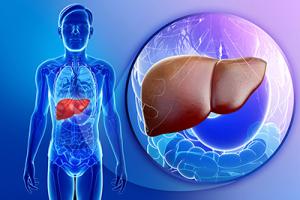
The Translational Liver Cancer (TLC) Consortium was established to advance translational research focused on early detection of liver cancer. The consortium goals are to conduct studies to improve the surveillance of liver cancer in high-risk populations, increase the fraction of liver cancer detected at an early stage, and better stratify patients at risk of developing liver cancer.
On This Page
- All Heading 2s will automatically be pulled in to this list.
- Do not edit the content on this template.
About TLC
Liver cancer is the third most common cause of cancer-related death worldwide, and in the United States, liver cancer represents about 5% of all cancer deaths. The incidence of hepatocellular carcinoma (HCC) is three times higher in men than women, and there are racial and ethnic differences in liver cancer occurrence. The liver cancer burden is higher in African Americans, Hispanics, and Asians. The etiological/risk factors for liver cancer include viral hepatitis (Hepatitis B virus and Hepatitis C virus), non-alcoholic steatohepatitis (NASH), and alcoholic liver disease (ALD). Approximately 80-90% of HCC occurs in patients with underlying liver cirrhosis. Patients with advanced cirrhosis represent a high-risk group for liver cancer. This Consortium consists of five Translational Research Centers (supported by RFA-CA-22-031, previously by RFA-CA-17-025) and one Data Management and Coordinating Center (supported by RFA-CA-22-032, previously by RFA-CA-17-028).
These multidisciplinary teams address the following areas:
- Improving the surveillance for liver cancers in patients with cirrhosis;
- Increasing the detectability of liver cancers at early stages; and/or
- Approaches to better stratify patients with cirrhosis, who are at risk of developing liver cancer.
To achieve these goals, the consortium consists of clinical researchers with multidisciplinary expertise in such areas as early cancer detection, biomarkers, surveillance, imaging, and biospecimen science.
Grantee Details
Program Contact(s)
Sudhir Srivastava, Ph.D., M.P.H.
Email: sudhir.srivastava@nih.gov
Sidney Fu, M.D.
Email: sidney.fu@nih.gov
Matthew Young, Ph.D.
Email: matthew.young@nih.gov
Guillermo Marquez, Ph.D.
Email: guillermo.marquez@nih.gov